
Concrete Sidewalks and Walkways in Indianapolis & Central Indiana
New and replacement walkways connecting driveways, entries, patios, and backyard living space.
Get a quote for sidewalks & walkways
Tell us about the project and we will follow up to schedule a site visit. Every quote is written and itemized before any work begins.
Concrete sidewalks and walkways
Walkways are small pours that people notice constantly. They are also where uneven settling turns into a trip hazard faster than anywhere else on the property.
What is involved in a new concrete walkway?
Walkway work covers routing the path along the way people actually walk, width and clean transitions where the walk meets the drive, porch, patio and steps, base compaction and joint placement to prevent uneven settling and trip hazards, pitch so the walk sheds water rather than icing over, and finish matched to the surrounding concrete where a match is achievable.
Every walkway work project Golden Paw takes begins the same way: a site visit, a drainage and grading assessment, and a written scope of work that shows base depth, slab thickness, reinforcement, joint layout, and finish as separate lines you can read and compare. We do not quote this work over the phone, because a number given before anyone has seen the site is a number that changes once we do.
The reason we lead with the scope rather than the price is that in this trade the number on its own tells you almost nothing. Two quotes for the same patio can differ by thousands and be describing genuinely different structures, and the difference is usually buried in the part you will never see: the base underneath. That is where a bid gets shaved, and it is the single largest factor in how the slab ages through central Indiana freeze-thaw cycling.
Quotes are sized by square footage and sent in writing after the site visit. Base depth, compaction, thickness, reinforcement, joint plan, and any drainage work each appear as their own line.
Informative rather than salesy. If the honest answer is that you can wait a season or that another kind of contractor suits the project better, that is what you will hear.
What goes into the project
Each of these appears in your written scope of work with a specification next to it rather than a description.
Path routing that matches how people walk
There is usually a worn line in the grass that tells you where the walk actually belongs. Routing the concrete along the path people already take is the difference between a walkway and a decoration.
Width and transition planning
Wide enough for two people side by side where that matters, and clean transitions where the walk meets the drive, the porch, the patio, and the steps.
Trip hazard and settlement prevention
Uneven settling on a walkway is a liability issue as well as an eyesore. Proper base compaction and joint placement are what keep panels level relative to each other over time.
Drainage and freeze considerations
Walkways that trap water are walkways that ice over and spall. Pitch and drainage get designed rather than assumed.
Public sidewalk requirements where they apply
Where a walk falls in the public right-of-way, different specifications and approvals can apply. We identify that before quoting rather than after pouring.
Finish matched to the surrounding concrete
Broom direction, joint spacing, and edge detail matched to the adjacent driveway or patio where a match is achievable.
- There is usually a worn line in the grass telling you where the walk belongs.
- Uneven settling on a walkway is a liability issue before it is an appearance issue.
- Width is the cheapest thing to get right at design and the most annoying to live with when wrong.
- Walkways that trap water ice over in January and spall by March.
- Public right-of-way walks can carry different specifications and approvals.
- Panels sitting at different heights, creating a trip edge
- A section lifted by a tree root
- Standing water on the walk after rain
- Surface breaking up across multiple panels
- A path worn into the grass because the walk goes the wrong way
| Decision | Practical effect |
|---|---|
| Route | Whether people use the walk or cut across the grass |
| Width | Whether two people can walk side by side |
| Transitions | How cleanly it meets drive, porch, patio and steps |
| Base compaction | Whether panels stay level relative to each other |
| Joint placement | Where the concrete cracks rather than whether it does |
| Pitch | Whether it sheds water or holds ice |
| Finish match | How obviously new reads against existing concrete |
Finishes that suit walkway work
Not every finish belongs on every surface. These are the ones worth considering for this kind of work, with the tradeoffs stated plainly.

Broom Finish Concrete
The workhorse finish. Textured, slip resistant, and the most forgiving surface through an Indiana winter.
About this finish →
Stamped Concrete
Pattern and texture pressed into fresh concrete to read like stone, brick, or plank, in one continuous slab.
About this finish →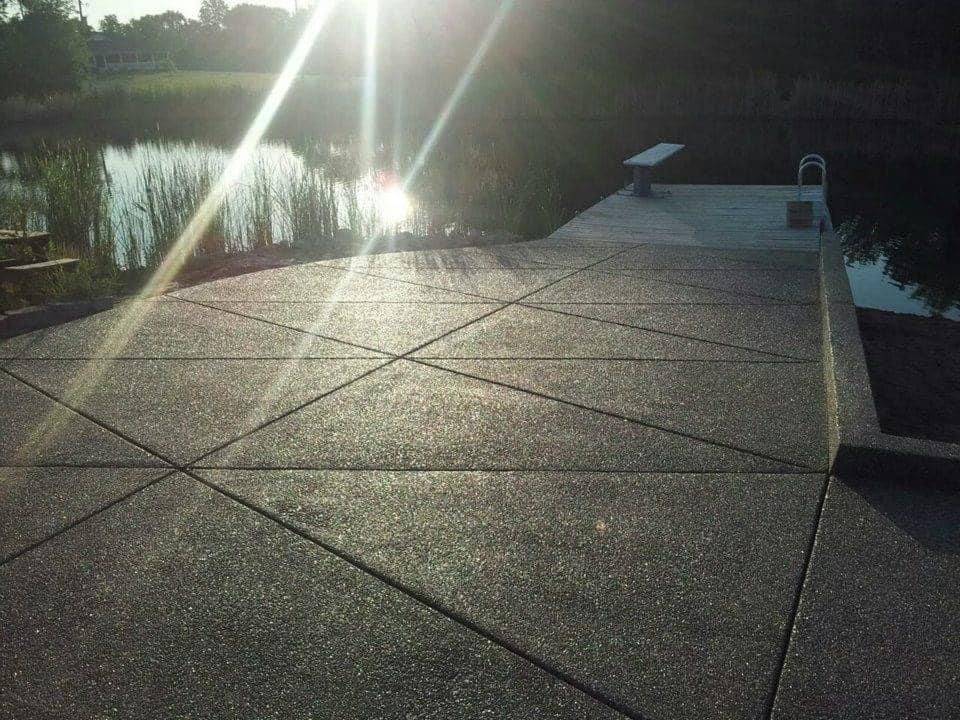
Exposed Aggregate Concrete
The stone in the mix revealed at the surface. Durable, high traction, and it ages better than almost anything else.
About this finish →Sidewalks & Walkways in your city
Every market in the service area brings its own soil, lot sizes, access constraints, and permitting. Pick your city for what actually changes locally.
Photographs of our own work
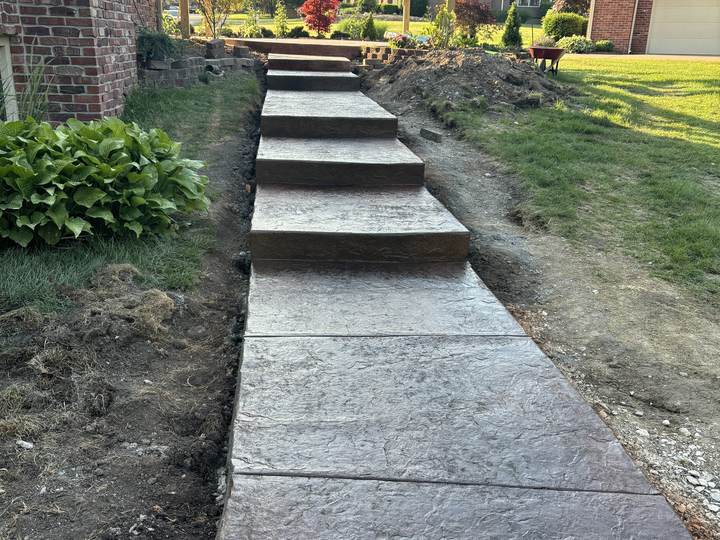
Stamped concrete walkway
Carmel, Indiana
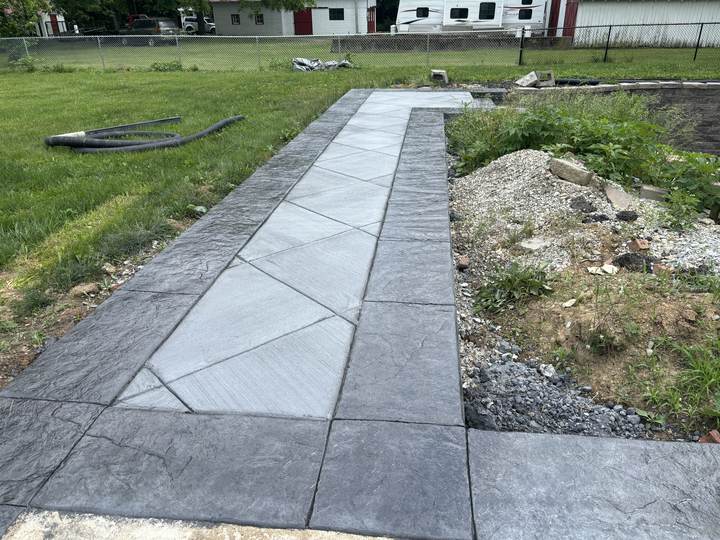
Stamped concrete walkway
Plainfield, Indiana

Broom finish concrete walkway
Carmel, Indiana
Sidewalks & Walkways questions
How wide should a walkway be?
It depends on use. A main entry walk that people use side by side reads differently than a service path to a shed or a gate. We talk through it at the site visit, because width is one of the cheapest things to get right at design and one of the most annoying to live with when it is wrong.
Can you fix an uneven or lifted sidewalk?
We handle it as replacement work rather than lifting. Where panels have lifted or settled, the cause is almost always the base or a root, and pouring back without addressing that just resets the clock. See our concrete replacement and repair service for how that process works.
Can a walkway match my patio finish?
Usually yes when both are being poured, and often yes when matching to existing concrete, though weathered concrete will never color-match a fresh pour exactly. We tell you which situation you are in before you decide.
Do you install paver walkways?
No. Poured concrete only. No paver walkways, paver patios, or paver driveways.
Who is responsible for the sidewalk along the street?
That varies by jurisdiction across the metro, and in many places the public walk is governed by the city rather than the homeowner alone. We check what applies at your address as part of the quoting process.
Do walkways need control joints?
Yes. Narrow pours still move, and joints cut on a deliberate plan are what keep that movement from becoming random cracking across the middle of a panel.
All poured concrete, all quoted the same way.
Site visit first. Then a number you can hold us to.
We do not quote concrete over the phone, because a number given before anyone has seen the site is a number that changes.
You send the details
The form or a phone call, whichever you prefer. A team member follows up the same day.
We come look at it
Measurements, photos, drainage and grading assessment, and a conversation about finish options.
You get it in writing
A written, itemized scope of work sized by square footage. What is included, what is not, and what it costs.
Request a written quote
Tell us about the project and we will follow up to schedule a site visit. Every quote is written and itemized before any work begins.
Thinking about walkway work?
Send the details and a team member follows up the same day to schedule a site visit.